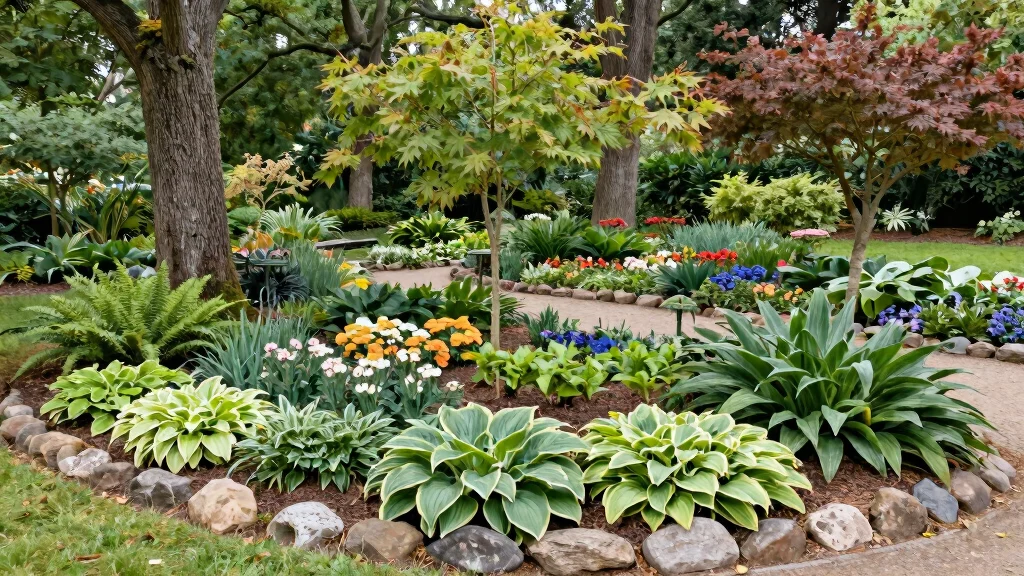
Creating beautiful flower beds around trees can transform forgotten corners of your garden into thriving displays of color and life. If you’re looking to fill those unused spaces with stunning blooms, you’ve come to the right place. I’m passionate about gardening and want to share my love for creating charming spots where nature flourishes. By utilizing flower beds around trees, you not only enhance your garden’s aesthetic appeal but also promote biodiversity.
This post is for anyone who loves gardening or wants to create a serene backyard retreat. Whether you’re a beginner or a seasoned gardener, if you’re eager to beautify your outdoor spaces, you’ll find valuable ideas here. I’ve gathered 7 creative concepts that are easy to implement, enriching, and perfect for making the most out of your garden’s potential.
Get ready to explore ways to incorporate colorful annuals, lush ferns, and even edible flowers around your trees. These ideas will help you turn those shaded spots into vibrant areas filled with life. You’ll walk away inspired with practical tips to enhance your garden and create cozy spaces that invite you to relax and enjoy nature.
Key Takeaways
– Creative Flower Bed Ideas: Discover 7 unique ways to plant flowers around trees, enhancing your garden’s visual appeal.
– Shade-Loving Plants: Learn about the best flowers and plants that thrive in shaded areas, perfect for planting under trees.
– Native Plant Benefits: Find out how using native plants can create a low-maintenance garden that supports local wildlife.
– Edible and Functional Gardens: Explore ideas for incorporating edible flowers into your flower beds, merging beauty with functionality.
– Cohesive Design Tips: Get practical advice on designing flower beds that harmonize with your existing tree garden, enhancing overall landscape aesthetics.
1. Colorful Carpet of Annuals
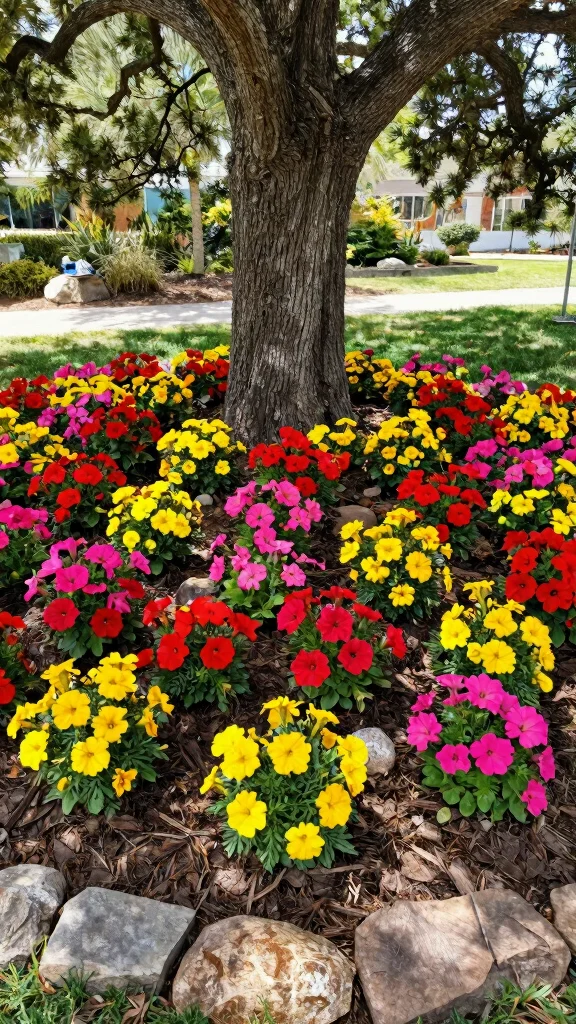
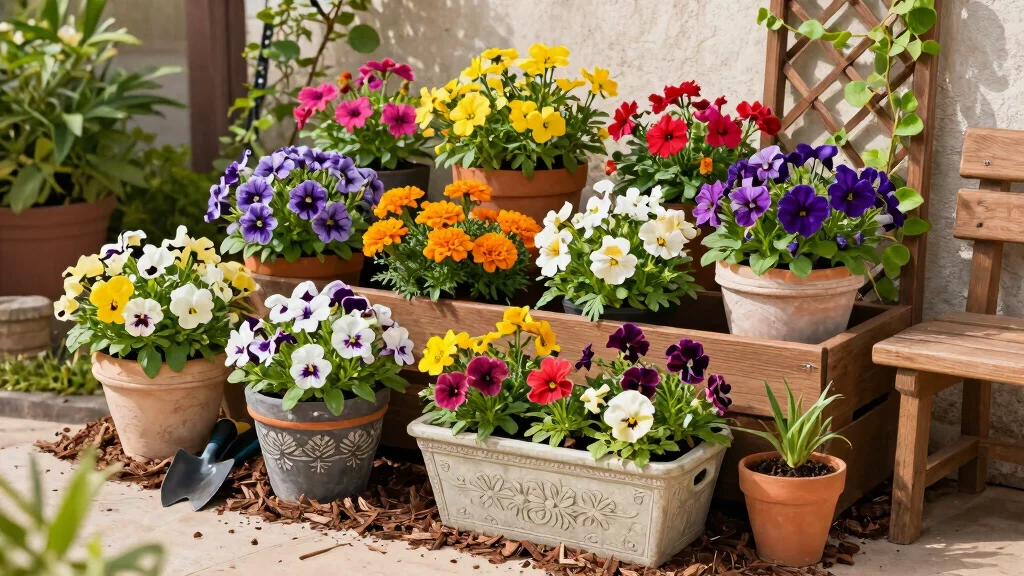
Transform the area around your trees into a vibrant canvas with a rich array of annual flowers! These delightful blooms not only brighten up your garden but also invite pollinators, creating a lively atmosphere. Imagine a tapestry of petunias, marigolds, and zinnias in stunning colors, all flourishing under the tree’s shade.
To achieve this, choose annuals that love partial sunlight and keep blooming all summer long. Mix different colors and heights for a striking visual effect that keeps your landscape fresh and engaging. This approach not only beautifies your garden but also adds life to the environment.
Key steps for planting annuals:
– Select annuals that provide continuous blooms throughout summer.
– Layer flowers by height for a dynamic visual display.
– Apply organic mulch to keep the soil moist and weed-free.
Creating a colorful flower bed around your trees not only enhances their beauty but also supports a thriving ecosystem in your garden.
Colorful Carpet of Annuals
Editor’s Choice

Back to the Roots 25.7qt (1 Cubic ft) Organic Premium Mulch

2. Serenity with Ferns and Hostas

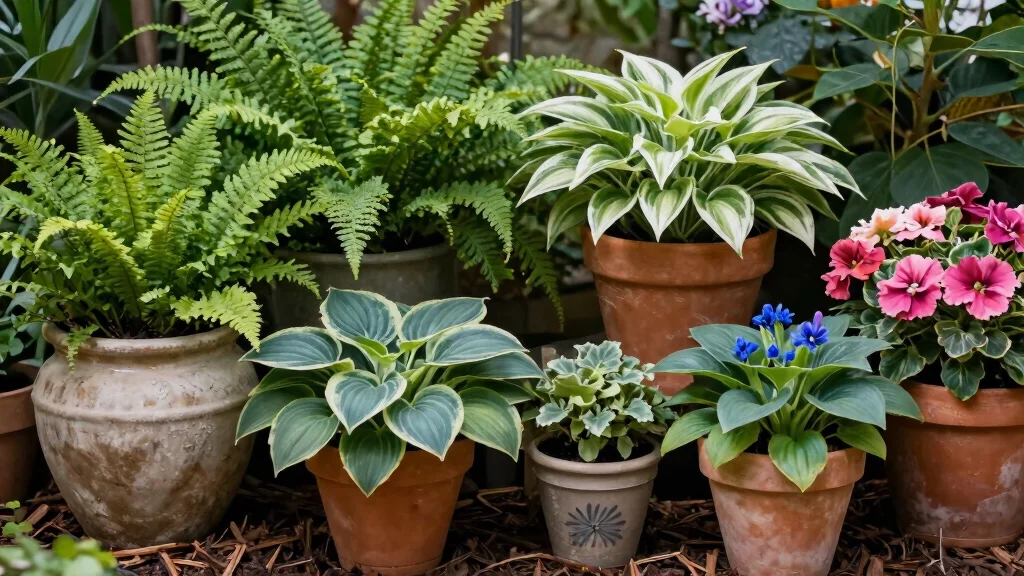
Craft a peaceful retreat around your trees by incorporating lush ferns and hostas. These plants flourish in shaded areas, offering a serene green backdrop that calms the senses. Picture the delicate fronds of Lady Ferns mingling with the striking variegated leaves of hostas, creating a harmonious landscape.
To maximize the beauty, choose hostas with various leaf shapes and colors, and cluster ferns to mimic their natural habitats. This combination not only looks gorgeous but also promotes a healthy garden environment by attracting beneficial insects.
Consider these tips for planting ferns and hostas:
– Select diverse hostas for rich color variation.
– Group ferns to replicate their natural growth patterns.
– Clear debris regularly to keep pests at bay.
This tranquil arrangement enhances your garden’s aesthetic and encourages a balanced ecosystem, making your outdoor space a peaceful haven.
Serenity with Ferns and Hostas
Editor’s Choice

Live Perennial Hosta – Bedazzled (3 Plants Per Pack) Beautiful Accent Pl…

AUNTESIGN Forget-Me-Not and Queen Anne’s Lace Pressed Wildflower Earring…
3. Vibrant Perennials for Year-Round Interest

For a flower bed that thrives with minimal effort, opt for perennials around your trees. Varieties like astilbes, bleeding hearts, and hellebores are perfect for shaded areas and return annually, making them a gardener’s favorite. Imagine the soft blooms of astilbes in early summer and the graceful sway of bleeding hearts in spring.
To ensure a striking display, select perennials that bloom at different times and complement each other’s colors. This way, your garden remains lively throughout the seasons, and you’ll enjoy the beauty year after year.
Here are some planting suggestions:
– Group perennials closely for a natural appearance.
– Mix bloom times to maintain seasonal interest.
– Choose native varieties to attract local wildlife.
By planting perennials around your trees, you enrich your landscape while supporting biodiversity, creating a thriving garden space.
Fun fact: When you mix astilbes, bleeding hearts, and hellebores in flower beds around trees, you get color from spring through frost—roughly 6–9 months of blooms. They’re shade-loving, low-maintenance perennials that return reliably year after year.
📹 Related Video: 10 Flowering SHADE-LOVING Perennials EVERY Garden Needs 😍 | Easy, Lush, and Long-Lasting!
Vibrant Perennials for Year-Round Interest
Editor’s Choice

Garden State Bulb Bleeding Heart Dicentra Spectabilis, Bare Roots, Sprin…

Giant Plume Assorted Astilbe Flowers – 3, 6, or 9 Bulbs -Attracts Butter…

Hellebore Seeds for Planting, 150+ Lenten Rose & Christmas Rose Mix, Per…
4. Groundcover Plants to Create a Cohesive Look

If you desire an attractive yet low-maintenance flower bed, groundcover plants are the way to go. These hardy plants quickly fill in spaces, suppressing weeds and holding moisture around your trees. Imagine a lush carpet of creeping thyme or ajuga, providing a beautiful foundation for your garden.
Choose groundcover options that thrive in shade and offer blooms to attract pollinators. Mixing various groundcovers creates texture and visual interest, enhancing the overall appeal of your landscape.
Start with these tips for selecting groundcovers:
– Combine different varieties for diverse textures and colors.
– Ensure chosen groundcovers fit your local climate.
– Arrange plants in layers for a more appealing layout.
Using groundcover plants not only beautifies the area around your trees but also protects the soil, making them essential for a thriving garden.
Groundcover plants are the secret to a low-maintenance, cohesive look in flower beds around trees. They quickly fill gaps, suppress weeds, and hold moisture, creating a lush carpet. Try shade-tolerant options like creeping thyme or ajuga to bloom for pollinators.
You might also like
Top Varieties for Different Conditions
1. Creeping Thyme
– Best conditions: Perfect for hot, dry climates and areas with full sun.
– Key features: This low-growing herb creates a lovely green mat and produces small purple flowers. It’s drought-tolerant and can handle foot traffic.
– Considerations: Avoid overly wet areas, as it thrives best in well-draining soil.
2. Lungwort (Pulmonaria)
– Best conditions: Ideal for shady areas in temperate climates.
– Key features: Known for its unique spotted leaves and early spring flowers that bloom in various colors. It attracts bees and butterflies!
– Considerations: It prefers moist, nutrient-rich soil and may require some protection from harsh afternoon sun.
3. Astilbe
– Best conditions: Thrives in partial to full shade, making it perfect for under trees.
– Key features: Astilbe produces feathery plumes of flowers in shades of pink, white, and red. It adds a lush, romantic touch to any garden.
– Considerations: Ensure the soil is consistently moist; it doesn’t tolerate dry conditions well.
4. Hellebore (Lenten Rose)
– Best conditions: Best suited for cool, moist areas, making it suitable for shaded spots.
– Key features: Hellebores bloom in late winter to early spring, providing welcome color when little else is flowering. They’re also deer-resistant.
– Considerations: They prefer well-drained soil and can be slow to establish in the first year.
5. Bleeding Heart (Dicentra)
– Best conditions: Grows best in partial shade with moist soil.
– Key features: With its heart-shaped flowers, this perennial is a classic choice for spring gardens. It adds a whimsical touch to shaded spots.
– Considerations: Bleeding hearts go dormant in summer, so plan your garden to fill in the gaps during that time.
6. Japanese Forest Grass (Hakonechloa macra)
– Best conditions: Thrives in shady, moist areas and is excellent for creating a lush ground cover.
– Key features: This ornamental grass adds a beautiful cascading effect, with its golden-yellow color brightening shady spots.
– Considerations: It needs protection from strong winds and prefers rich, well-draining soil.
7. Coral Bells (Heuchera)
– Best conditions: Grows well in partial shade to full sun, adaptable to various soil types.
– Key features: Coral bells come in a range of foliage colors and produce delicate flower spikes. They’re great for adding visual interest year-round.
– Considerations: While they’re hardy, they require moderate watering, especially in hotter months.
Climate/Condition Guide:
– Temperate: Most of the above varieties will flourish here. Select shade-loving plants for areas with limited sun.
– Coastal: Choose salt-tolerant plants like creeping thyme. Ensure you have well-draining soil to prevent rot.
– Hot/Dry: Opt for drought-resistant options like creeping thyme and coral bells, which can thrive in less water.
– Humid: Go for moisture-loving plants such as astilbe and lungwort to handle the excess humidity without wilting.
Growing Tips:
1. Plan for Sunlight: Determine how much light your tree area receives throughout the day. Choose plants accordingly.
2. Soil Health: Enhance soil with compost to ensure nutrients are available for your flowers, especially in shaded areas.
3. Consistent Watering: Newly planted flowers need regular watering. Check soil moisture levels before watering to avoid overwatering.
Avoid:
1. Plant Overcrowding: Don’t cram too many plants under one tree. Space them out to prevent competition for nutrients and water.
2. Ignoring Soil Conditions: Pay attention to your soil type. Plants have specific needs, and planting in poor soil can lead to failure.
Groundcover Plants to Create a Cohesive Look
Editor’s Choice

Clovers Garden Ajuga Burgundy Glow (Bugleweed) Plants – Two (2) Live P…
KVITER 500 Lemon Thyme Seeds for Planting (Thymus Pulegioides) – Wild …
Back to the Roots 100% Organic Mulch, 58 Quart, Expanding Coconut Husk B…
5. Edible Flowers for a Functional Garden

Why not blend beauty with utility by planting edible flowers around your trees? Many vibrant blooms, like nasturtiums and borage, not only elevate your garden’s aesthetics but also provide delicious flavors for your meals. Imagine bright, colorful flowers that you can use in salads or as garnishes, enhancing your culinary creations.
To get started, research which edible flowers grow best in your area and consider companion planting to support growth and deter pests. Regularly harvesting blooms encourages continuous production, keeping your garden flourishing.
Here are some tips for incorporating edible flowers:
– Investigate local edible flowers suited for your climate.
– Pair flowers with companion plants for better growth.
– Harvest regularly to promote new blooms.
Incorporating edible flowers around your trees not only diversifies your garden’s beauty but also enriches its purpose, offering both visual delight and delicious flavors.
Edible Flowers for a Functional Garden
Editor’s Choice

Seed Needs Herb Seeds Variety Pack Culinary Herb Collection (12 Individu…

Seed Needs Edible Wildflower Seed Packet Collection (7 Varieties of Flow…
6. Native Plants for Low Maintenance and Harmony

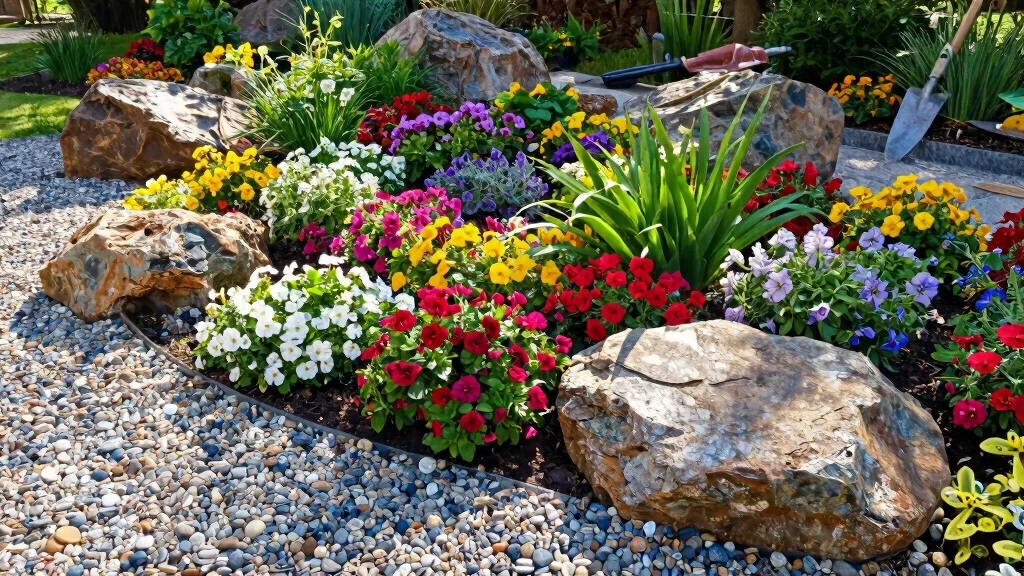
For a sustainable and low-maintenance garden, consider using native plants around your trees. These species naturally thrive in your local environment, requiring less care and water, making them an eco-friendly choice. Picture stunning coneflowers and black-eyed Susans that not only beautify your garden but also support local wildlife.
By planting native flowers, you create a harmonious landscape that enhances the ecosystem’s health. Grouping these plants together can create a stunning visual impact while promoting biodiversity in your outdoor space.
Keep these tips in mind for planting native flowers:
– Research native varieties that suit your soil and climate.
– Cluster native plants for a striking effect.
– Incorporate diverse heights and bloom times for ongoing interest.
Native plants elevate your flower beds around trees, creating a beautiful and thriving space while promoting local ecological balance.
Fun fact: Native plants around trees can cut watering needs by up to 30% while boosting local wildlife and pollinators. When you group them, you create a low-maintenance, bird-friendly garden that still looks vibrant year-round.
You Might Also Like
Native Plants for Low Maintenance and Harmony
Editor’s Choice

Northeast Wildflower Seeds – Extra Large 1 Ounce Packet – Over 7,500 Nat…

Garden Elements 100% Natural Cocoa Bean Shell Mulch for Gardens, Flower …
7. Rock Gardens for Texture and Interest

Rock gardens offer a unique way to introduce texture and visual interest around your trees. By combining stones, gravel, and hardy plants, you can create a stunning landscape that thrives in the often challenging conditions found beneath tree canopies. Imagine vibrant succulents nestled among smooth stones, creating a visually appealing oasis.
Choose a mix of drought-resistant plants and arrange rocks thoughtfully to mimic nature. This design not only beautifies your garden but also minimizes soil disturbance, allowing your trees to flourish.
Consider these ideas for your rock garden:
– Select rocks that match your garden style, whether sleek or rustic.
– Use plants that tolerate dry conditions for easy maintenance.
– Arrange stones and plants naturally for an organic look.
Rock gardens provide an innovative solution for those tricky spots around trees, enhancing your outdoor space’s overall beauty.
Rock Gardens for Texture and Interest
Editor’s Choice

ZOOFOX 10lb Natural Rocks Stones, Small Washed Gravel for Terrariums, Su…

Virekm River Rocks, Decorative Ornamental Pebbles,Garden Landscaping Sto…

Altman Plants Deluxe Live Succulents (6 Pack), No Duplicates, Assorted V…
Conclusion
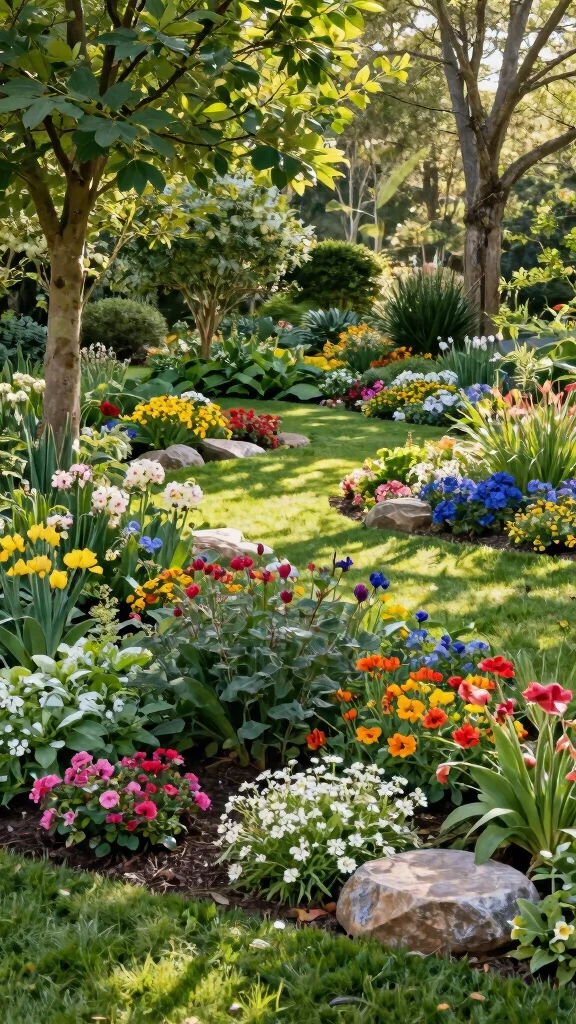
Blooming flower beds around your trees not only enhance the beauty of your garden but also support a vibrant ecosystem. By choosing the right plants and designing thoughtfully, you can create stunning spaces that celebrate the natural beauty of your landscape.
Whether you prefer colorful annuals, serene ferns, or functional edible flowers, there’s a delightful way to fill in those unused spots around your trees. Dive into these ideas and let your creativity flourish in your garden! Remember, every little bloom adds character to your outdoor sanctuary.
Note: We aim to provide accurate product links, but some may occasionally expire or become unavailable. If this happens, please search directly on Amazon for the product or a suitable alternative.
This post contains Amazon affiliate links, meaning we may earn a small commission if you purchase through our links, at no extra cost to you.
Frequently Asked Questions
What are practical starter ideas for flower beds around trees that protect roots and boost blooms?
Start with a shallow, outer ring around the tree rather than digging into the root zone. Keep beds outside the dripline to protect feeder roots. Create three planting layers: a shade-loving groundcover layer (like ajuga or creeping thyme), a middle layer of flowering perennials (such as hosta, heuchera, astilbe, ferns), and a lighter outer edge with seasonal color. Mulch with 2–3 inches of organic material to conserve moisture and improve soil. This tree garden design approach supports soil health and creates healthy flower beds around trees. Water deeply during dry spells and avoid heavy fertilizer near the trunk. Start small, measure space, and expand as you learn your tree’s water needs.
Which shade-loving plants work best for planting under trees and in tree garden design?
Under trees, choose plants that tolerate dappled light and competition from roots. Top picks include hosta, heuchera, epimedium, astrilbe, and ferns (like ostrich or Japanese painted fern). For extra color, add Brunnera macrophylla and pulmonaria (lungwort). You can also tuck in shade-friendly bulbs like snowdrops or crocuses in early spring. When planning flower bed ideas around trees, group plants by similar water needs and bloom times to simplify landscaping around trees and planting flowers under trees.
How can I design a cohesive landscaping around trees that includes flower bed ideas around trunks?
Start with a simple ring around each tree, keeping the bed shallow and outside the dripline. use a unifying edge—wood mulch, stone, or a low border—so beds feel connected across your yard. Pick a color palette and repeat plant groups to create rhythm; for example, a purple-and-white scheme using shade-loving plants like hosta and heuchera. Use three planting layers: groundcover, mid-height perennials, and a few taller accents at the outer edge to add depth. Include a slow-drip irrigation line and a consistent mulch layer to suppress weeds and conserve moisture. This tree garden design approach makes flower bed ideas feel intentional and cohesive.
What maintenance tips help flower beds around trees stay healthy throughout the seasons?
Keep soil evenly moist at the base and avoid wetting the trunk. Replenish mulch to maintain a 2–3 inch depth and renew annually. Deadhead spent blooms and divide perennials every few years to keep plants vigorous. Feed lightly—trees compete for nutrients—using a balanced fertilizer only if your soil test says so. Remove fallen leaves and debris to reduce disease risk, and protect roots from lawn equipment with a defined edge. In winter, add a thicker mulch layer to protect tender roots. These habits support thriving flower beds around trees year-round.
What common mistakes should be avoided when planting under trees and around roots to ensure healthy blooms?
Avoid digging inside the tree’s dripline or compacting the soil, which can damage roots. Don’t overload beds with aggressive, water-hungry species that compete with the tree; instead choose shade-loving plants with shallow roots. Don’t plant in the same spot every year; rotate or refresh beds to prevent soil depletion. Avoid heavy fertilizer near trunks; use compost and follow soil-test recommendations. Don’t rely solely on lawn sprinklers—install a dedicated drip line to deliver water to the bed. Finally, stay on top of seasonal maintenance to prevent weeds and pests from taking over. These missteps can derail your landscaping around trees and flower bed ideas.
Related Topics
flower beds around trees
tree garden design
planting flowers under trees
landscaping around trees
shade-loving plants
permaculture gardening
flower bed ideas
easy gardening
beginner friendly
seasonal blooms
garden aesthetics
sustainable landscaping