
Creating a low maintenance garden can feel like an overwhelming task, especially when you want it to look stunning. That’s why I’ve put together this post about rock flower beds. With a focus on drought-resistant plants, these ideas promise to add beauty to your outdoor space without requiring a lot of hands-on care.
If you’re someone who loves gardening but struggles to keep everything alive during dry spells, you’re in the right place. This blog is designed for garden enthusiasts who want to combine aesthetics with practicality. Whether you have a small patch of land or a sprawling backyard, you’ll find inspiration that suits your needs.
What’s in it for you? I’ve compiled eight creative flower bed designs that will not only look amazing but will also save you time and effort. From a desert-inspired oasis to wildlife-friendly beds, you’ll discover ideas that are both visually appealing and easy to maintain. Let’s dive in and explore how you can transform your garden into a stunning oasis with minimal upkeep!
Key Takeaways
– Explore Various Designs: Each of the eight ideas presents a different approach, from modern minimalist to rustic stone borders.
– Drought-Resistant Plants: These designs emphasize using plants that thrive in dry conditions, making them ideal for low-maintenance gardens.
– Mixing Colors and Textures: Combining different flowers and stones adds depth and interest to your flower beds.
– Wildlife Benefits: Some designs create a friendly habitat for local wildlife, enriching your garden’s ecosystem.
– Practical Installation Tips: Each idea includes practical advice for implementation, helping you visualize how to create your own stunning flower bed.
1. Succulent Paradise

Imagine a garden that thrives with minimal effort. A succulent paradise can be your go-to solution for a low-maintenance flower bed. These resilient plants come in a variety of stunning colors and shapes, offering a feast for the eyes. Picture your garden filled with rich greens, soft pinks, and vibrant purples without the hassle of constant upkeep.
To achieve this look, position larger succulents like agave or aloe at the back and place smaller varieties, such as jade or hens-and-chicks, in the front. This layering not only creates visual depth but also ensures that each plant gets ample sunlight, requiring little more than occasional watering.
Key steps to create your succulent paradise:
– Rotate plants for even sunlight exposure.
– Add decorative gravel to enhance textures and colors.
– Incorporate a vertical wall of succulents for added drama.
– Pair silver-leaf succulents with vibrant flowers for a striking contrast.
This design transforms your outdoor space into a stunning oasis that thrives with little effort, allowing you to enjoy its beauty year-round.
Succulent Paradise
Editor’s Choice
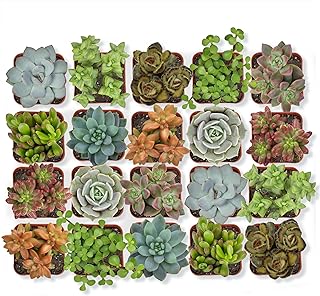
Altman Plants, Live Succulent Plants (20 Pack) Assorted Potted Succulent…


Back to the Roots 100% Organic Succulent & Cacti Mix (6 Quart) | Made in…
2. Desert-Inspired Oasis

Bring the enchanting beauty of the desert into your own garden with a desert-inspired rock flower bed. This unique design showcases drought-tolerant plants like cacti, yuccas, and agaves, beautifully complemented by decorative rocks. The natural palette of browns and greens transforms your garden into a serene desert landscape.
Create visual interest by using large boulders as focal points while scattering smaller stones to form pathways. You can also add colorful pebbles or sand to enhance the overall aesthetic, giving it that authentic desert vibe.
Essentials for your desert oasis:
– Group plants with similar water needs for efficient irrigation.
– Mix textures by combining spiky cacti with soft agaves.
– Use gravel to cover bare soil for a polished look.
– Ensure ample sunlight for a thriving desert environment.
This garden design not only captivates the eye but also creates a sustainable environment that requires minimal care, letting you enjoy its beauty effortlessly.
📹 Related Video: Subtropical Desert Garden Inspiration: Ideas for Your Backyard Oasis
Desert-Inspired Oasis
Editor’s Choice

Bits and Pieces – Stepping Stones Outdoor Walkway – 12″ River Rock Lands…


Virekm Landscaping Pebbles, River Rocks Decorative Ornamental Pebbles Ga…
3. Vibrant Flower Combinations
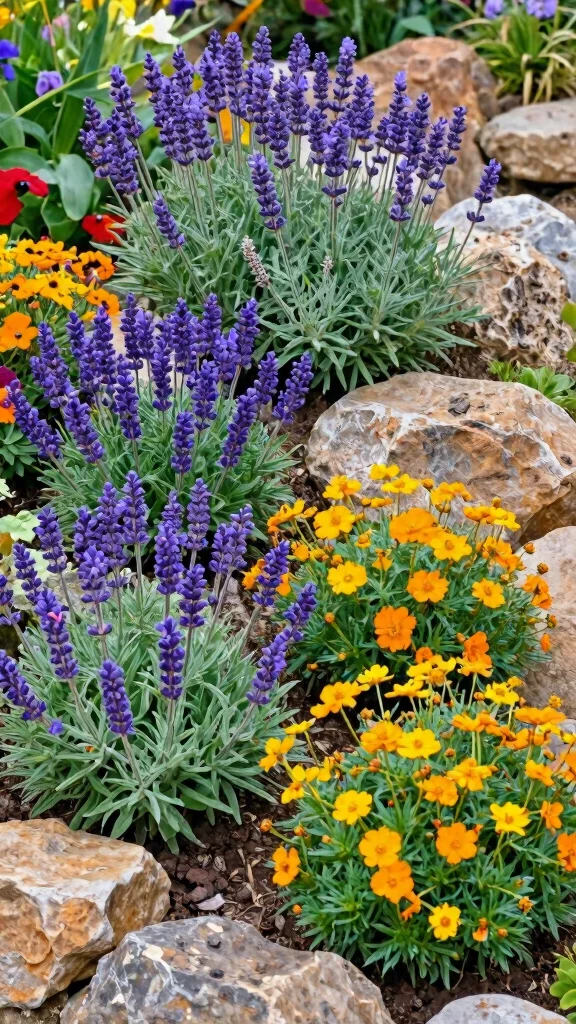
For an explosion of color, consider vibrant flower combinations in your rock flower bed. Plants like lavender, salvia, and coreopsis are not only hardy but also bloom profusely, providing lively hues that brighten your space. By layering taller plants in the back and shorter ones in the front, you can ensure that every bloom gets its moment to shine.
Use decorative rocks to define sections within your garden, adding structure to the design. A diverse mix of flowering plants will also attract pollinators, enriching your garden’s ecosystem.
Tips for creating vibrant combinations:
– Set a color palette to unify your flower bed.
– Choose diverse blooms to ensure year-round interest.
– Vary plant heights for added visual depth.
– Regularly deadhead flowers to promote continued blooming.
This colorful arrangement not only enhances your garden’s aesthetic but also supports local wildlife, creating a lively and engaging outdoor space.
❝ Did you know that 50% of garden water use can be cut with drought-tolerant rock flower beds? A vibrant mix of lavender, salvia, and coreopsis keeps color blooming from back to front while using less water.
Vibrant Flower Combinations
Editor’s Choice

Seed Needs, Scarlet Red Sage Seeds – 800 Heirloom Seeds for Planting Sal…

Polished Colorful Healing Crystal Stone Set, 72 Pcs 0.5″ Tumbled Gemston…

Garden Tools Set, 3 Pack Heavy Duty Gardening Tools Set Include Garden S…
4. Rustic Stone Borders

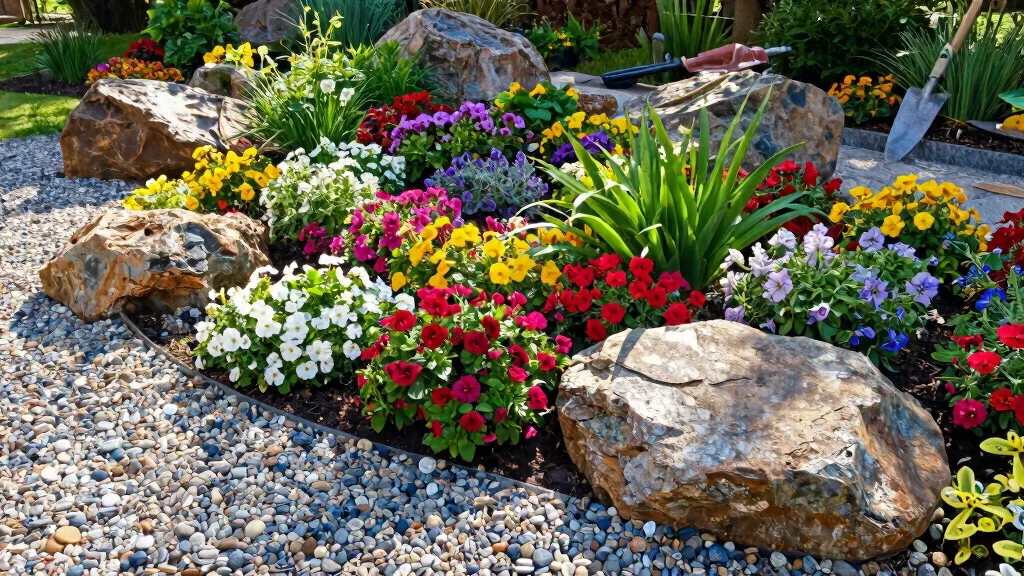
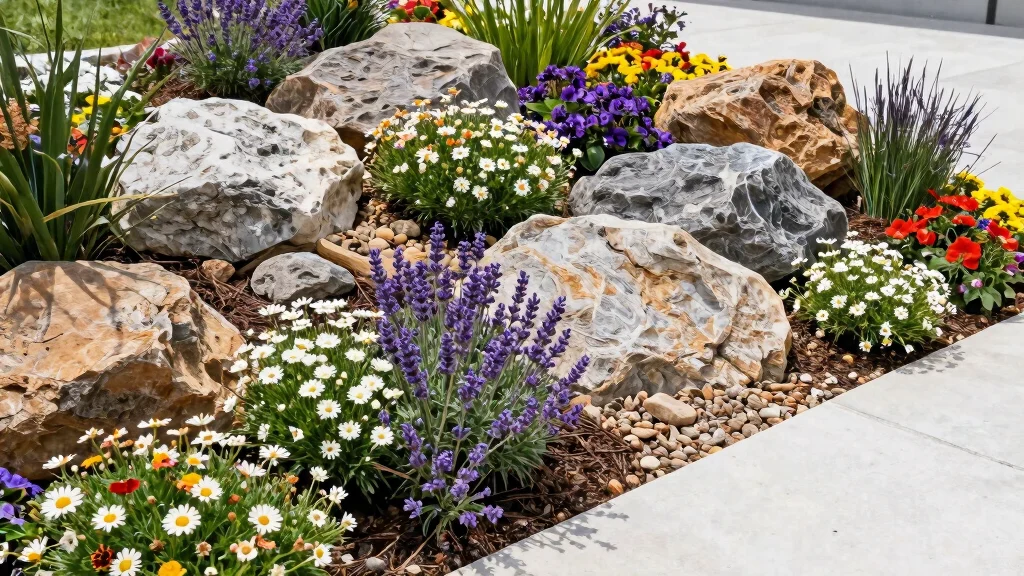
Capture the essence of rustic charm with natural stone borders in your rock flower bed. A combination of smooth river stones and rugged terrain rocks creates an organic look that enhances your garden’s beauty. This design also effectively defines space, clearly separating your flower bed from other areas.
Consider planting low-growing drought-resistant options like sedum or creeping thyme that will gracefully spill over the stones, enhancing the rustic ambiance. The contrast between the textures of the stones and the plants adds a casual elegance to your space.
Steps to achieve rustic borders:
– Select larger stones for dramatic effects, or smaller ones for subtlety.
– Choose hardy ground covers that thrive in rocky conditions.
– Include native wildflowers for a natural prairie aesthetic.
– Check regularly for weeds that may invade your borders.
This design not only beautifies your garden but also creates a welcoming and relaxed atmosphere that invites you to enjoy your outdoor space.
You might also like
Rustic Stone Borders
Editor’s Choice

Natural River Rocks-5 lbs of Pebbles and River Stones,2-3 Inch Plant Roc…
Drought Tolerant Wildflowers Mix – Extra Large Packet – Over 7,500 O…

Imitation Stone Garden Fence – DIY Garden Edging Border, 2026 New Plasti…
5. Modern Minimalist

If sleek lines and simplicity appeal to you, a modern minimalist rock flower bed may be your ideal choice. Focus on a select few drought-resistant plants arranged in a clean, geometric layout for a stylish look. Succulents, ornamental grasses, and low-maintenance shrubs work beautifully in this contemporary design.
Use larger stones or concrete blocks as borders to enhance the modern aesthetic. Sticking to a neutral or monochromatic color palette adds sophistication, making this design perfect for urban gardens or contemporary homes.
Key principles for modern minimalism:
– Repeat plant types for a rhythmic visual flow.
– Cluster plants in groups of three or five for balance.
– Leave negative space between plants for a clean look.
– Incorporate uplighting for evening ambiance.
This minimalist approach not only streamlines your garden but also creates a striking focal point that complements any modern setting.
Did you know that modern minimalist rock flower beds with drought-tolerant plants can cut outdoor watering by up to 60%? Use larger stones and a monochrome palette to keep maintenance ultra-simple while still looking stylish.
Top Varieties for Different Conditions
1. Sedum ‘Autumn Joy’
– Best conditions: Thrives in hot, dry climates with full sun exposure.
– Key features: This succulent produces stunning pink flowers in late summer, attracting butterflies to your garden.
– Considerations: While drought-resistant, it may need some protection from harsh winter conditions to avoid rot.
2. Agave parryi
– Best conditions: Ideal for arid regions and well-draining soils.
– Key features: Agave parryi has striking, spiky foliage that adds a dramatic touch to any rock flower bed.
– Considerations: Its sharp edges can be a hazard, so plant it away from high-traffic areas.
3. Lavender ‘Munstead’
– Best conditions: Prefers sunny spots and well-draining soil, making it great for temperate regions.
– Key features: The aromatic flowers bloom in vibrant purple, providing both beauty and fragrance.
– Considerations: While drought-tolerant, it may require occasional watering during extreme heat.
4. Echinacea purpurea (Purple Coneflower)
– Best conditions: Grows well in a variety of climates but thrives in full sun and well-drained soil.
– Key features: Known for its daisy-like flowers, this plant is a magnet for pollinators like bees and butterflies.
– Considerations: It can spread aggressively, so consider using barriers if you want to control its growth.
5. Yucca filamentosa (Adam’s Needle)
– Best conditions: Suited for hot, dry areas, and does well in sandy or rocky soils.
– Key features: This plant has sword-like leaves and produces tall flower spikes that bloom in summer.
– Considerations: Yucca can become invasive, so regular maintenance is necessary to keep it in check.
6. Delosperma cooperi (Ice Plant)
– Best conditions: Thrives in full sun and is perfect for rocky or sandy soils.
– Key features: With bright, colorful flowers, it blooms from spring to fall, creating a vibrant display.
– Considerations: It requires good drainage and can rot if overwatered, so be cautious with your watering schedule.
7. Sempervivum (Hens and Chicks)
– Best conditions: Grows best in full sun and well-drained soil, making it perfect for colder climates.
– Key features: These rosette-shaped succulents produce offsets, adding visual interest and a unique touch to your garden.
– Considerations: They’re hardy plants but can struggle in overly wet conditions, so ensure proper drainage.
Climate/Condition Guide:
– Temperate: Choose plants like Lavender and Echinacea that thrive in moderate climates. They can handle a bit of moisture and don’t mind cooler temperatures.
– Continental: Look for hardy varieties such as Sedum and Sempervivum that can survive temperature fluctuations and winter extremes.
– Coastal: Opt for salt-tolerant plants like Yucca and Agave that can handle wind and salty air.
– Hot/Dry: Drought-resistant choices like Delosperma and Sedum are ideal as they require minimal water and thrive in full sun.
– Humid: Focus on plants that can tolerate high humidity yet still resist rot, such as Echinacea and Lavender.
Growing Tips:
– Water deeply but infrequently to encourage deep root growth. This will help your plants withstand drought conditions better.
– Choose a mix of foliage types and colors for a more visually appealing rock flower bed that attracts various pollinators.
– Always check your soil for drainage. If it retains too much moisture, consider amending it with sand or gravel.
Avoid:
– Overwatering your plants, especially succulents, as this can lead to root rot and other issues.
– Planting aggressive growers too close together, as they can outcompete other plants for resources.
Modern Minimalist
Editor’s Choice

Pink Muhly Grass – 10 Live Plants – Muhlenbergia Capillaris – Hairawn Mu…

1000 pcs Kalanchoe blossfeldiana Seeds – Vibrant Blooming Drought Resist…

EasyFlex No-Dig Landscape Edging with Anchoring Spikes, 2.7 in Tall Deco…
6. Colorful Gravel Pathways
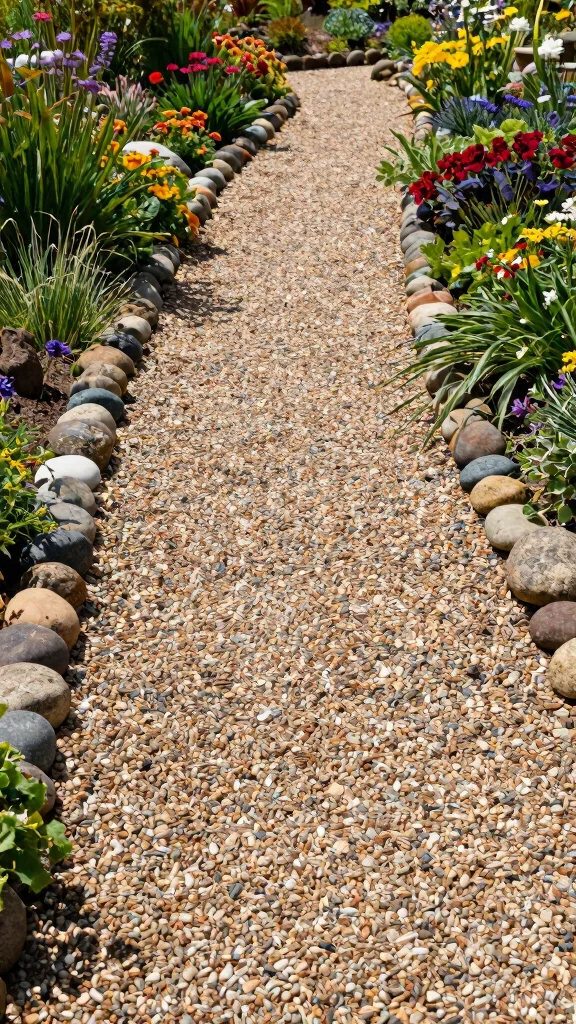
Elevate your rock flower bed with colorful gravel pathways that invite exploration. These pathways not only provide essential access through your garden but also introduce a delightful splash of color and texture. Choose gravel hues that complement your plants, forging a harmonious connection throughout the area.
Adding rounded stones along the edges creates a polished look, ensuring your garden remains tidy and appealing. This design element makes navigating your garden a pleasure while maintaining its low-maintenance nature.
Essentials for your colorful pathways:
– Ensure pathways are wide enough for easy access.
– Use decorative stone borders for a finished appearance.
– Allow flowers to peek through gravel for added charm.
– Change gravel colors seasonally to keep the look fresh.
This design enhances your garden’s functionality while adding vibrant color, making it a beautiful and inviting space.
Colorful Gravel Pathways
Editor’s Choice

Amazon Basics Flexible Landscape Edging Coil for Garden Border, Flower B…

FANTIAN 20 lbs Large River Rocks for Outdoor Landscaping, 3-4 Inch Decor…

YISZM 2LB Succulent and Cactus Gravel Pebbles, 1/5 Inch Natural Decorati…
7. Wildlife-Friendly Beds

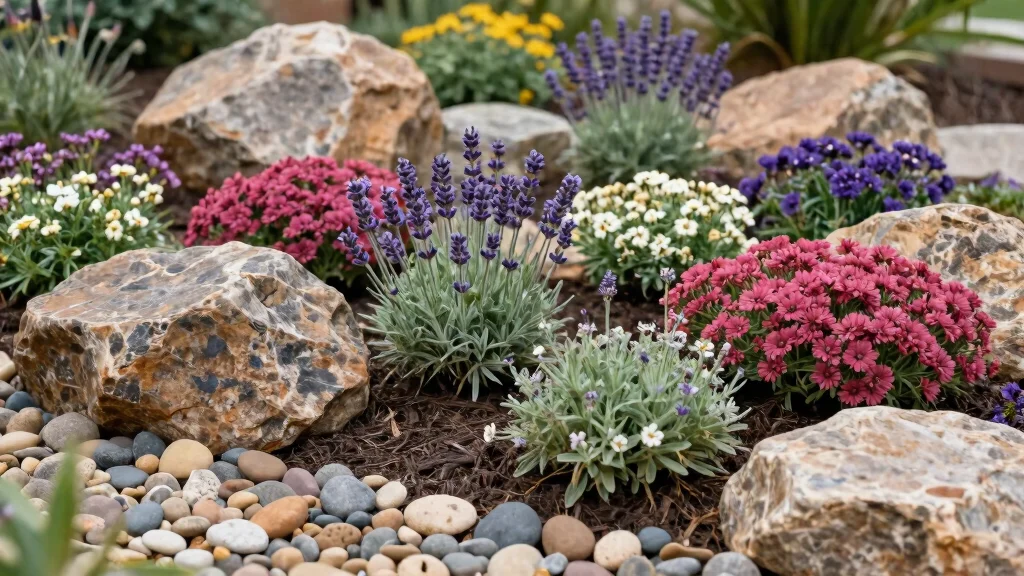
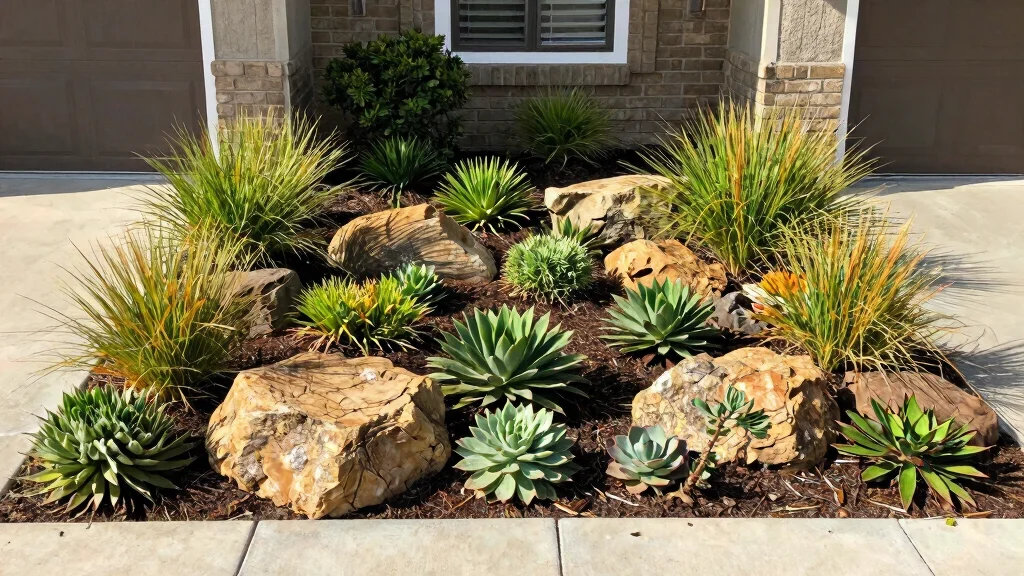
Design a rock flower bed that invites local wildlife to thrive! Select a variety of drought-resistant plants that attract butterflies, bees, and other pollinators. Native plants like coneflowers, echinacea, and yarrow not only thrive in dry conditions but also support local ecosystems.
Incorporating rocks and stones provides shelter and nesting spots for small creatures, enriching your garden’s ecosystem. This thoughtful design beautifies your space while promoting biodiversity.
Tips for creating wildlife-friendly beds:
– Mix flowering and foliage plants for diverse habitats.
– Add log piles or stones for wildlife shelter.
– Consider a small birdbath to attract more visitors.
– Monitor plant health to maintain a vibrant ecosystem.
This garden not only looks stunning but also contributes positively to the environment, making it a fulfilling project for any gardener.
You Might Also Like
Wildlife-Friendly Beds
Editor’s Choice

Pulovin 15 lbs White Rocks for Landscaping, 1-2 inch Large White Rocks f…

Drought Resistant Wildflower Seeds – 1oz, Open-Pollinated Bulk Flower Se…
BugHut Soil Wizard Organic Soil Amendment – All Purpose Plant Food for…
8. Artistic Stone Arrangements

Let your creativity flourish with artistic stone arrangements in your rock flower bed! Use a variety of stone sizes and shapes to craft unique patterns or sculptures throughout your garden. Pair these arrangements with drought-resistant plants that thrive in rocky environments, creating eye-catching focal points.
Consider incorporating colored stones or artistic sculptures to amplify the visual appeal, allowing your garden to reflect your personal style.
Ideas for artistic stone arrangements:
– Craft curves or spirals for a whimsical touch.
– Integrate plants around stone features for cohesion.
– Change arrangements seasonally for fresh looks.
– Add personal decorative elements to showcase your individuality.
This imaginative approach to your garden not only enhances its beauty but also provides a unique space that showcases your creativity.
Artful stone arrangements prove that creativity and low maintenance can go hand in hand. With drought-resistant plants, your rock flower beds become living sculptures that flourish with minimal water. It’s easy to customize colored stones and shapes to reflect your style while keeping care simple.
Artistic Stone Arrangements
Editor’s Choice
Virekm Landscaping Pebbles, River Rocks Decorative Ornamental Pebbles Ga…

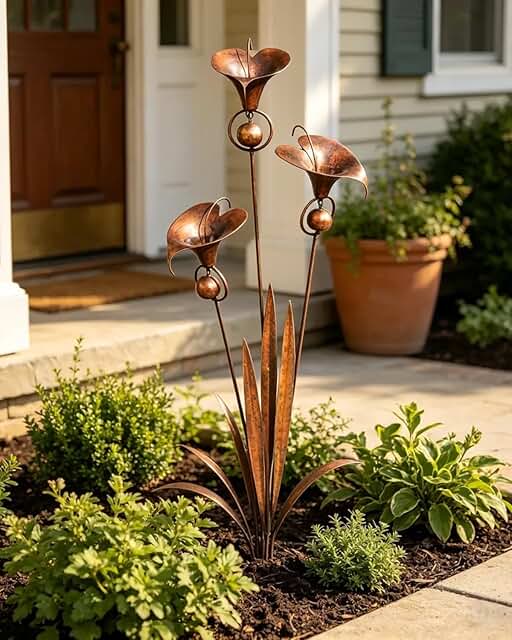
2026 Flamed Copper Three Calla Lilies Garden Stake with Bells, Rain Catc…
Conclusion

With these eight rock flower bed ideas, you can create a stunning and low-maintenance garden border that reflects your style and loves for nature.
From vibrant flower combinations to wildlife-friendly designs, there’s something for every gardener. Embrace the beauty of drought-resistant plants and decorative rocks to bring your outdoor space to life.
Start planning your rock flower bed today and enjoy the benefits of a beautiful, sustainable garden!
Note: We aim to provide accurate product links, but some may occasionally expire or become unavailable. If this happens, please search directly on Amazon for the product or a suitable alternative.
This post contains Amazon affiliate links, meaning we may earn a small commission if you purchase through our links, at no extra cost to you.
Frequently Asked Questions
What exactly are rock flower beds and why are they ideal for a low-maintenance garden border?
Rock flower beds blend decorative rocks or gravel with drought-resistant plants to create a border that stays tidy with minimal watering. They’re ideal for border landscaping and low maintenance garden because they cut water use, reduce weeds, and add texture and color. To get started, choose a sunny site with good drainage, prepare a light soil mix, and plant drought-tolerant species like sedum, sempervivum, lavender, thyme, and rockrose. Mulch or cap the bed with gravel to suppress weeds and conserve moisture. Group plants with similar water needs for easier maintenance.
Practical setup tips: aim for a border width of 12 to 24 inches, install a simple weed barrier or landscape fabric, add a drainage layer if the site is damp, then top with gravel. Plant in naturalistic drifts rather than singles for a full look.
With these elements, your rock flower beds deliver stunning color and texture while staying wonderfully low maintenance.
Which drought-resistant plants are best for rock flower beds along a border?
For border-friendly rock flower beds, choose plants that love sun and drought. Try sedum varieties, sempervivum (hens and chicks), lavender, thyme, and rockrose plus combinations like Lychnis coronaria and Artemisia. In hotter spots, add Gaillardia (blanket flower) and Santolina for silver foliage that reflects heat. Space clumps in groups of 3 to 5 to create impact and ensure they share similar water needs. Water deeply during establishment, then taper off to occasional deep watering. Deadhead faded blooms to encourage repeat flowering and divide clumps every few years to keep plants vigorous.
These drought-resistant choices help your border glow with color and texture without demanding constant care.
How can I design rock garden ideas to create a stunning, low-maintenance border?
Start with a simple plan: pick a cohesive color palette, stack plants by height from front to back, and mix textures from fleshy sedums to fine grasses. Install curved edges for a natural look, ensure excellent drainage, and use edging materials to keep gravel in place. Choose a mix of evergreen foliage and seasonal bloomers for year-round interest, and consider a light layer of gravel or mulch that minimizes weeds. For maintenance, group plants with similar water needs, use a drip irrigation line, and prune lightly after flowering. Plant in drifts rather than singles for a lush, low-maintenance effect.
With these rock garden ideas, you can achieve a stunning border that stays vibrant through the seasons.
What are common mistakes when creating a rock flower bed border and how can I avoid them?
Common mistakes include poor drainage and overwatering, choosing plants with incompatible sun or water needs, and crowding plants which makes maintenance harder. Also avoid using heavy soil without improving drainage, and skip planning for winter interest. To fix these: ensure drainage by raising beds or adding grit, select drought-resistant species for the site, and plant in naturalistic drifts with space to grow. Use a weed barrier under gravel and maintain a 2-3 inch mulch layer away from plant crowns. Finally, set realistic expectations and plan a simple maintenance routine for pruning, deadheading, and weed control.
These precautions keep your rock flower bed border healthy and easy to manage.
Can I mix vibrant colors and textures in rock flower beds without increasing maintenance?
Absolutely. Build a cohesive color scheme with 2–3 main colors and neutral accents, then layer textures with broad-leaved evergreens, fine-leaved grasses, and chunky flowering perennials. Choose drought-tolerant bloomers like sedum, lavender, and yarrow that fit your sun exposure. Keep maintenance low with a light mulch, a simple edging, and a drip irrigation system to deliver water efficiently. Plant in drifts to reduce weeding, deadhead regularly for continuous color, and rely on evergreen foliage for winter interest.
By planning ahead and sticking to plants with similar care needs, you can enjoy vibrant rock flower beds without extra work.
Related Topics
rock flower beds
drought-resistant plants
low maintenance garden
flower bed designs
border landscaping
rock garden ideas
easy gardening
xeriscaping
garden borders
landscape design
beginner friendly
seasonal flowers